 LINE
LINE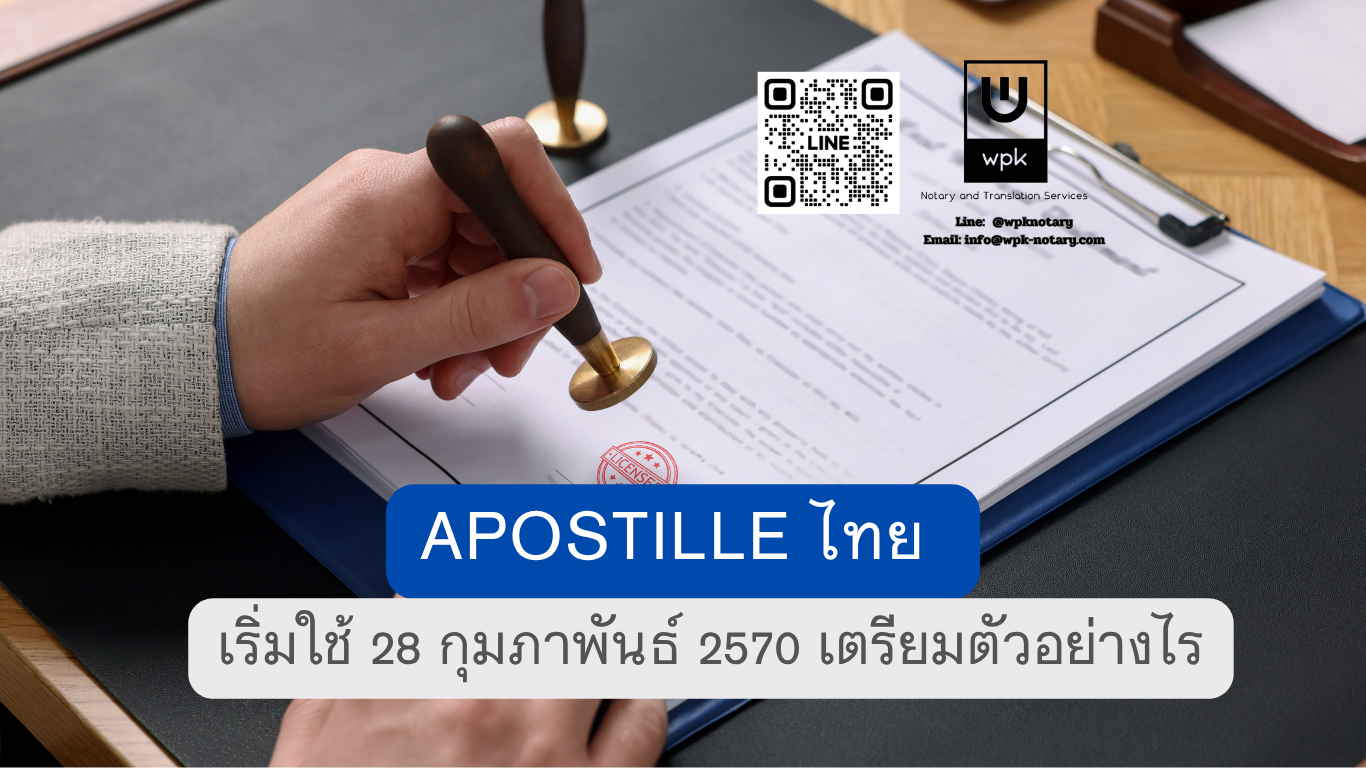
You have a Thai company affidavit that a bank in Singapore needs next month, and a German marriage certificate that a Thai district office wants before it will register anything. Both documents travel the same slow road today: certification by the issuing authority, translation, legalization by the Department of Consular Affairs, then a stamp from the relevant embassy.
That road is about to change. Thailand deposited its instrument of accession to the 1961 Apostille Convention on 30 June 2026, and the Convention enters into force for Thailand on 28 February 2027. If you are planning a transaction, a visa file, or a court filing that straddles that date, the difference between apostille vs legalization decides how long your paperwork takes and how many counters it passes.
Apostille vs legalization: what the two routes actually are
Legalization is the chain method. Each authority vouches for the signature and seal of the one before it. A Thai public document heading abroad is certified by the Thai agency that issued it, translated where the destination requires, legalized by the Department of Consular Affairs of the Ministry of Foreign Affairs, then legalized again by the destination country's embassy in Thailand. Every link is a separate submission with its own queue.
Apostille replaces that chain with one certificate. A designated Competent Authority in the issuing country attaches an apostille, and every other Contracting State to the 1961 Convention accepts it without any embassy step. There are 130 Contracting Parties, and Thailand becomes one of them on 28 February 2027.
The practical difference is the embassy leg. Apostille removes it between Contracting States, and removes nothing else.
What the apostille does not do
An apostille certifies the origin of a public document, meaning the authenticity of the signature, the capacity of the signatory, and the identity of the seal or stamp. It says nothing about whether the content is correct, and nothing about whether the receiving authority will accept the document for its own purposes.
Three things survive the switch.
- Translation requirements. If the receiving country or agency wants a translation, an apostille does not supply one.
- The receiving authority's own rules. A Land Department office, a bank, a university, or an immigration officer can still impose format, recency, or content requirements of its own.
- Documents from non-Contracting States. If the other country is not party to the Convention, the legalization chain remains the route in both directions.
Which route applies to your document right now
Until 28 February 2027, legalization is the route for everything. From that date, the answer turns on the direction of travel and on whether the other country is a Contracting State.
- Thai documents going abroad to a Contracting State. An apostille from Thailand's designated Competent Authority should be enough on its own.
- Foreign documents coming into Thailand from a Contracting State. An apostille from that country replaces the Thai embassy step. Today that document has to be legalized in the issuing country and then by the Thai embassy there.
- Either direction, other country not a Contracting State. No change. The chain method continues exactly as it works today.
Contracting State status is per country, so a document used in several countries needs each destination checked separately.
Documents this affects most
Estate paperwork is covered in Apostille and Legalizing Thai Estate Documents for Use Abroad. Outside estates, the documents most often needing authentication are company affidavits and shareholder lists from the Department of Business Development, board resolutions and audited financial statements for foreign banks, powers of attorney in both directions, and civil status records, degree certificates, and police clearance certificates.
Step by step: preparing a document today
- Confirm the destination country's current requirement. Ask the receiving bank, registry, court, or authority in writing what they need and in what language. This takes days rather than weeks and prevents the most expensive mistake, which is authenticating the wrong version of a document.
- Obtain a certified original or copy from the issuing agency. Company records come from the Department of Business Development, civil status records from the district or khet office, court documents from the issuing court. Timing depends on the agency.
- Arrange a certified translation where the destination requires one, before the legalization step, because the translation is normally legalized together with the source document.
- Submit for legalization to the Department of Consular Affairs, Nationality and Legalization Division, 123 Chaeng Watthana Road, Lak Si, Bangkok 10210, Monday to Friday, 08.30 to 16.30. The Department publishes both a standard and an express service, each with its own processing time and fee per legalization stamp, and the figures differ by document type. Confirm the current rate and turnaround with the Department for your specific document before you go.
- Complete the destination country's embassy step where that country is not a Contracting State, or where the document is used before 28 February 2027. Each mission sets its own timetable.
No law firm controls how a foreign authority treats your document. Acceptance is decided by the receiving institution, and neither the apostille nor the legalization stamp guarantees the outcome you want.
Planning across the 28 February 2027 switch
Used well before the date, take the legalization route and do not wait. Used well after, with a Contracting State on the other side, waiting for the apostille route usually saves a step and a queue.
The awkward case is a document needed in the weeks around the date. Foreign authorities update their guidance at their own pace, and a receiving office may keep asking for consular legalization out of habit for a while after the Convention takes effect. Where the deadline is real and the cost of rejection is high, authenticate under the rules that are certain today and ask the receiving authority in writing which form it will accept. It is advisable to consult a qualified Thai lawyer for your specific situation.
Where signing authority for someone who cannot travel is involved, see Power of Attorney in Thailand: What Foreign Nationals Need to Know Before You Sign. Where Thai real estate is involved, Can Foreigners Inherit Land and Condos in Thailand? covers the ownership questions that come first.
How WPK can help
Our team is made up of several lawyers with more than ten years of experience in cross-border document work.
- Reviewing your document set against the destination country's stated requirements before anything is submitted
- Certified translation between Thai, English, and Japanese, prepared so the translation and the source document move through legalization together
- Notarial services and signature certification by a Thai Notarial Services Attorney. Acceptance depends on the destination country's own rules, so we check that country's requirement for your matter rather than applying a general rule
- Drafting powers of attorney, affidavits, and corporate resolutions, and coordinating the legalization sequence
We sign an NDA before work starts at no cost, and revise our work free of charge where the error is ours.
Frequently asked questions
When exactly does Thailand start issuing apostilles?
The Convention enters into force for Thailand on 28 February 2027, following the deposit of the instrument of accession on 30 June 2026. Until that date, legalization is the route.
Do I still need a translation if my document has an apostille?
Yes, whenever the receiving authority requires one. The apostille certifies the signature, seal, and capacity of the official who issued the document. It does not make the document readable to an authority that works in another language.
Will documents legalized before 28 February 2027 still be valid afterwards?
A document that was properly legalized does not stop being properly legalized. What can change is what the receiving authority asks for, particularly where it requires a recent certificate. Confirm the recency requirement with that authority rather than assuming a document from last year still qualifies.
Which Thai authority will issue apostilles?
Thailand is listed on the HCCH site as having designated a Competent Authority under Article 6 of the Convention. Check that listing and the Ministry of Foreign Affairs announcements for how and where to file as the date approaches.
My document is going to a country that is not in the Convention. Does anything change?
No. Where the other country is not a Contracting State, the legalization chain continues in both directions exactly as it works today.
Talk to WPK about your document
The cost of getting authentication wrong is rarely the fee. It is the transaction that slips or the court filing that arrives without a document the court will accept. Send us the document and tell us where it is going, and we will tell you which route it needs now and whether waiting for 28 February 2027 works in your favor.
โดยสามารถทักแชทที่อยู่ทางด้านขวา หรือตามช่องทางต่อไปนี้ (ไลน์จะตอบไวที่สุด)
📧 Email: info@wpk-notary.com
📍 Facebook: WPK Notary
📲 Line: @wpknotary